
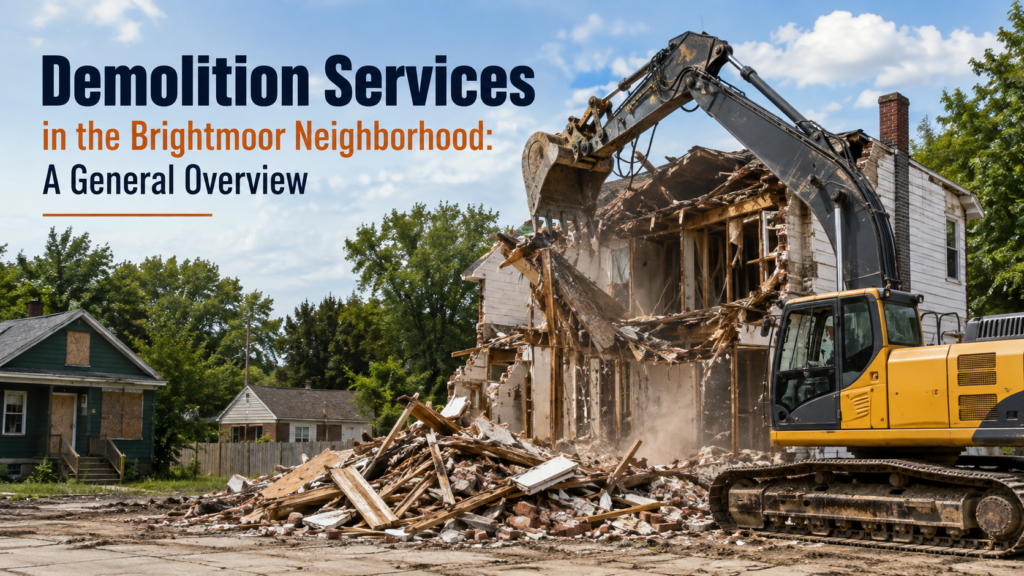
Brightmoor is a westside Detroit neighborhood originally developed in the 1920s, known for its rows of modest bungalow homes and, in more recent decades, for community-led efforts to repurpose vacant lots into gardens, green space, and neighborhood improvement projects. Demolition plays a notable role in this ongoing transformation, as removing unsafe or deteriorated structures is often a first step toward stabilizing a block and opening land up for new, community-focused uses. This guide covers the general Demolition Contractor Brightmoor process as it applies to a neighborhood like Brightmoor.
Why Demolition Matters in Brightmoor
Like many Detroit neighborhoods that experienced significant population decline over past decades, Brightmoor includes a number of vacant and severely deteriorated structures alongside occupied, well-maintained homes. Demolishing structures that are beyond repair helps address safety hazards, reduces the risk of fire or structural collapse, and supports community efforts to convert vacant lots into productive green space, including some of the neighborhood’s well-known community gardens and reforestation projects.
This connection between demolition and land reuse is part of what distinguishes Brightmoor from many other neighborhoods, since a cleared lot here is frequently the starting point for a defined community project rather than an indefinite vacancy.
Assessing Structures Before Demolition
Not every vacant or aging structure needs to come down, which is why an accurate assessment is an important first step. This process evaluates the building’s structural condition, checks for fire or water damage, and determines whether a structure poses an immediate safety risk or could potentially be renovated instead. For homes built in the 1920s, this assessment also typically considers the age-appropriate construction methods and materials used at the time.
Permits and City Requirements
As with any demolition project in Detroit, a permit is required before structural work can begin. Depending on whether a property is privately owned or part of a city-led demolition initiative, the process and required documentation can vary. Utility disconnection remains a required step regardless of ownership, ensuring gas, electric, and water service are safely capped before demolition.
For properties that are part of a larger, city-coordinated blight removal effort, timelines and documentation requirements can differ somewhat from a standard privately initiated demolition, so it is worth clarifying which process applies early on.
Hazardous Material Surveys
Given that much of Brightmoor’s housing stock dates to the 1920s and 1930s, hazardous materials such as asbestos and lead-based paint are a common concern. A pre-demolition survey identifies whether these materials are present so they can be properly abated by licensed professionals before mechanical demolition proceeds, protecting both the demolition crew and the surrounding community.
Given how many Brightmoor lots border community gardens or other actively used green spaces, extra attention is often paid to soil safety as part of this review, since deteriorated painted surfaces on a nearby structure can sometimes affect adjacent soil over time.
How Demolition Is Carried Out
Once a structure has been assessed, permitted, and cleared of hazardous materials, mechanical demolition is typically used to safely remove the building. Because many Brightmoor lots are adjacent to community gardens, greened lots, or occupied neighboring homes, contractors generally take extra care with dust control, debris containment, and protecting nearby land uses during the process.
Supporting Land Reuse After Demolition
One of the notable aspects of demolition work in Brightmoor is what happens to the land afterward. Given the neighborhood’s strong community focus on greening and land reuse, many lots are graded and prepared with future community use in mind, whether that means a garden, green space, or a stable lot ready for future redevelopment. Proper site grading and debris removal are essential to making that transition possible.
Debris Sorting and Recycling
Demolition debris is typically sorted on-site to separate recyclable materials, including wood, metal, and masonry, from general waste. This approach reduces landfill volume and can support broader neighborhood sustainability goals that are already a visible part of Brightmoor’s community identity.
Wood salvaged from older bungalow-style construction is sometimes set aside specifically for reuse in community projects, given the strong tradition of hands-on neighborhood improvement work in Brightmoor. Coordinating this kind of material reuse ahead of time, when it’s a priority for the property owner or a community partner, is generally straightforward to build into the demolition plan.
Timeline and Planning Considerations
Demolition timelines depend on the condition and size of the structure, whether hazardous materials are present, and current permitting turnaround with the city. Vacant structures that have deteriorated significantly may require additional assessment time before a demolition plan can be finalized.
Signs a Structure May Be Beyond Renovation
Given the age of Brightmoor’s 1920s-era housing stock and the number of long-vacant structures in the neighborhood, a few indicators commonly help determine whether a building is a genuine renovation candidate. These include significant foundation settling, extensive water damage from long-term roof failures, structural framing compromised by pest activity, and signs of fire damage that may not be visible from the exterior. Prolonged vacancy tends to accelerate deterioration, which is part of why a thorough structural assessment is such an important step before finalizing a demolition or renovation decision.
Mechanical Demolition vs. Selective Deconstruction
Mechanical demolition, using an excavator or similar heavy equipment, is the typical approach for removing a structure that is beyond repair. In some cases, particularly when a community organization or homeowner wants to salvage architectural materials from a 1920s-era bungalow before it comes down, a more selective, hand-based deconstruction approach is used for at least part of the process, allowing usable materials to be set aside first.
How Seasonal Weather Affects Scheduling
Seasonal weather plays a role in demolition scheduling in Brightmoor as it does throughout Southeast Michigan. Frozen ground during winter months can complicate excavation and site grading, which is part of why many demolition and subsequent land reuse projects, including new garden installations, are timed for the spring through fall months.
Brightmoor’s Broader Land Reuse Movement
Brightmoor has become known across Detroit for community-driven efforts to turn vacant land into an asset rather than a liability, including urban farms, pocket forests, and neighborhood gathering spaces built on formerly vacant lots. Demolition is often the first practical step in that process, since a stable, cleared, and properly graded lot is a prerequisite for most of these community-led projects. Contractors working in the neighborhood are often familiar with this broader context and plan site grading accordingly.
What to Expect if a Structure Is Condemned
In some cases, a structure in Brightmoor may be formally condemned by the city due to safety concerns, which can initiate a different process than a standard voluntary demolition. Property owners facing a condemnation order should understand the city’s specific timeline and requirements, since these situations sometimes come with compressed deadlines compared to a project the owner initiates on their own schedule.
What Happens on Demolition Day
Once permitting, utility disconnection, and any hazardous material abatement are finished, the physical demolition of a typical Brightmoor bungalow is often completed within a day or two. Crews pay close attention to protecting adjacent lots, whether those lots are occupied homes, community gardens, or other greened spaces, using dust suppression and careful equipment placement throughout the process.
After the Structure Comes Down
Following the main teardown, remaining work includes foundation removal, backfilling the excavated area, and confirming utility lines are properly capped below grade. Final grading is especially important in Brightmoor given how frequently cleared lots are converted into gardens or green space, since a well-graded, stable lot is essential groundwork for whatever community use follows.
Frequently Asked Questions
Is every vacant home in Brightmoor a candidate for demolition? No, an assessment is typically conducted first to determine whether a structure poses a safety risk or could instead be renovated.
What permits are needed for demolition in this neighborhood? A city of Detroit demolition permit is required, with documentation requirements that can vary depending on property ownership.
Are older Brightmoor homes likely to contain asbestos or lead paint? Many do, given the neighborhood’s 1920s and 1930s housing stock, which is why a hazardous materials survey is standard practice.
What typically happens to a lot after demolition in Brightmoor? Lots are often graded and prepared with future community use in mind, which can include gardens, green space, or future redevelopment.
How is demolition debris handled? Materials like wood, metal, and masonry are commonly sorted on-site for recycling, reducing the amount of waste sent to landfills.
Are community organizations involved in demolition decisions in Brightmoor? Often, yes, particularly for lots that are planned for community gardens or green space, since local organizations frequently coordinate on how vacant land will be used after a structure is removed.
What should a property owner do if a structure has been condemned by the city? It is important to understand the specific timeline and requirements attached to a condemnation order, since these can differ from a standard voluntary demolition process initiated by the owner.
Property owners and community organizations working in the area can look into a demolition contractor serving Brightmoor to understand how the process fits into the neighborhood’s ongoing land reuse and revitalization efforts.